Signed in as:
filler@godaddy.com
Signed in as:
filler@godaddy.com

Many people ask themselves:
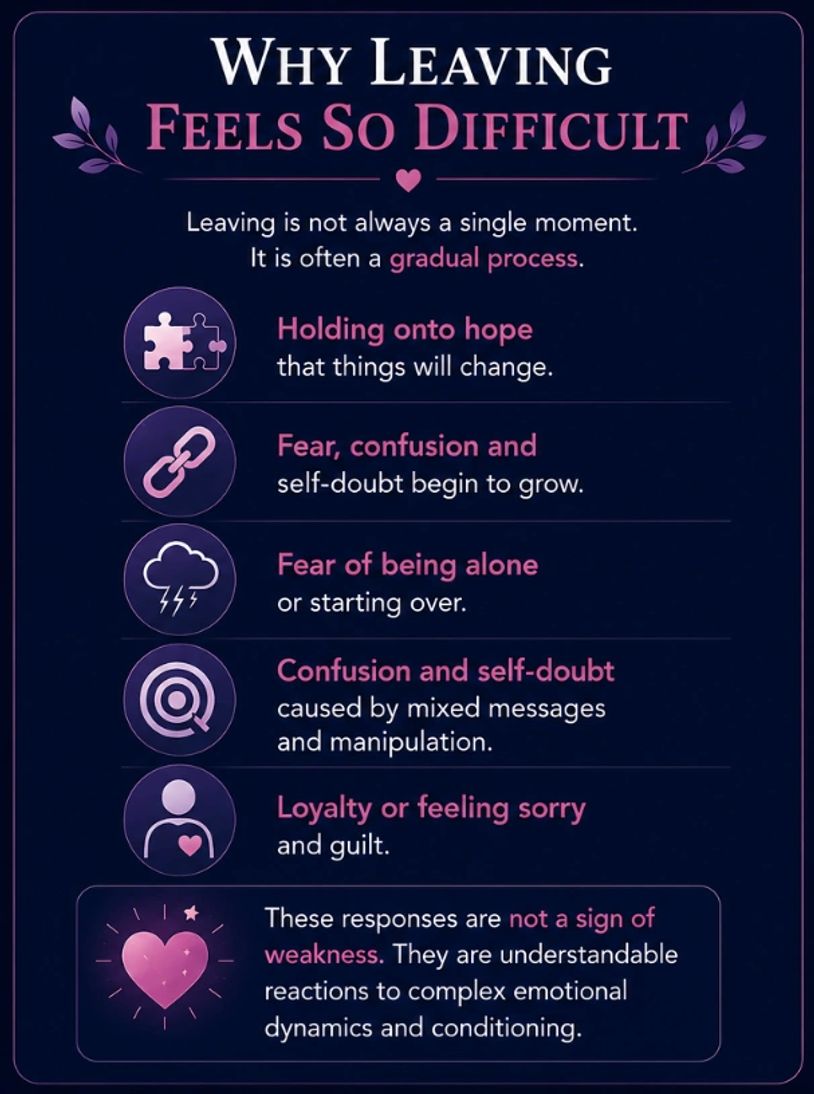
"If the relationship was so painful, why was it so hard to leave?"
The answer is often not weakness, lack of willpower, or poor judgement. In many cases, the answer lies in something known as a trauma bond.
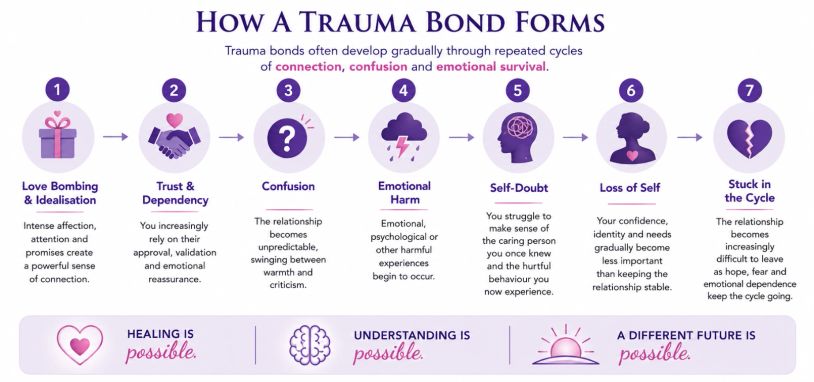
A trauma bond is a powerful emotional attachment that develops through cycles of affection, connection, hope, fear, criticism, rejection, and emotional pain. These relationships can feel incredibly intense and difficult to break away from, even when they are causing significant distress.
Understanding trauma bonds can be an important first step towards healing, rebuilding self-trust, and moving forward.
A trauma bond develops when positive experiences and emotional rewards become mixed with periods of emotional pain, manipulation, unpredictability, or control.
The relationship may involve:
Over time, the brain becomes attached not only to the relationship itself but also to the anticipation that things will improve.
This can create a powerful cycle that becomes increasingly difficult to leave.

Trauma bonds often develop through a process known as intermittent reinforcement.
This means positive experiences occur unpredictably.
For example:
Because positive moments become unpredictable, they can feel even more powerful and meaningful.
The brain begins to focus on the possibility of future reward rather than the reality of the overall relationship.
This can strengthen emotional attachment despite ongoing distress..

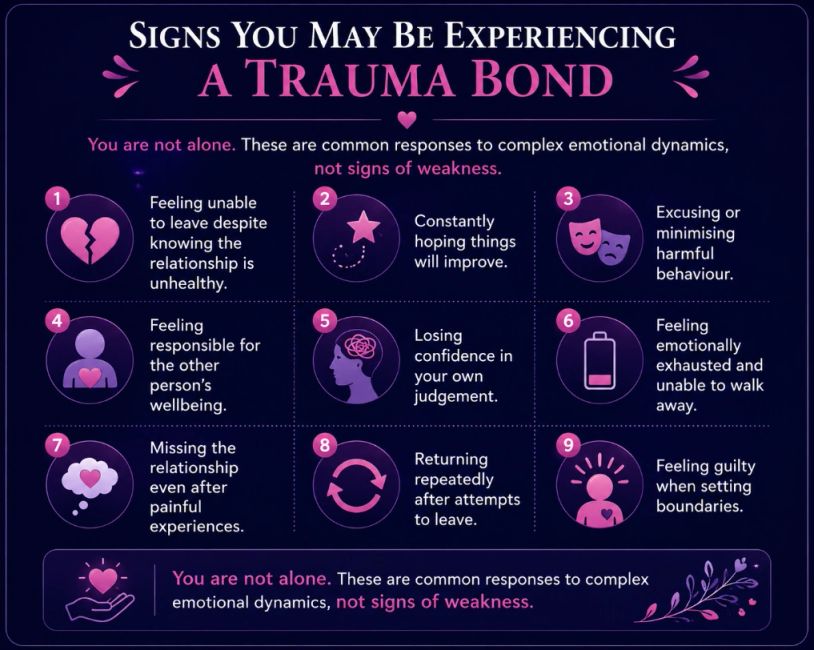
Many people recognise several of these experiences. In reality, these responses are often understandable reactions to complex emotional dynamics rather than signs of weakness.

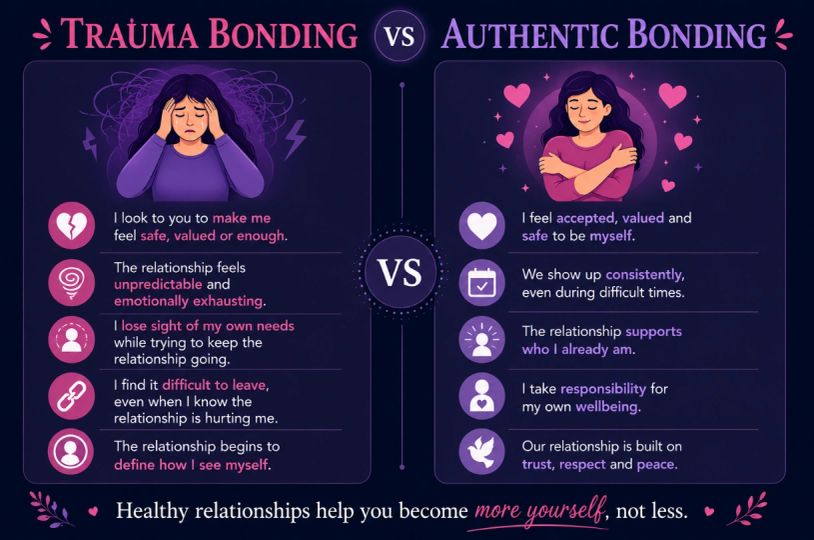
One of the most confusing aspects of trauma bonding is that it can feel very similar to love.
However, there are important differences.
The intensity of a relationship is not always a sign of emotional health.
Sometimes what feels like love may actually be a combination of fear, hope, and emotional survival.
Safety
Trust
Consistency
Mutual respect
Emotional security
Anxiety
Uncertainty
Emotional highs and lows
Fear of abandonment
Constant self-doubt


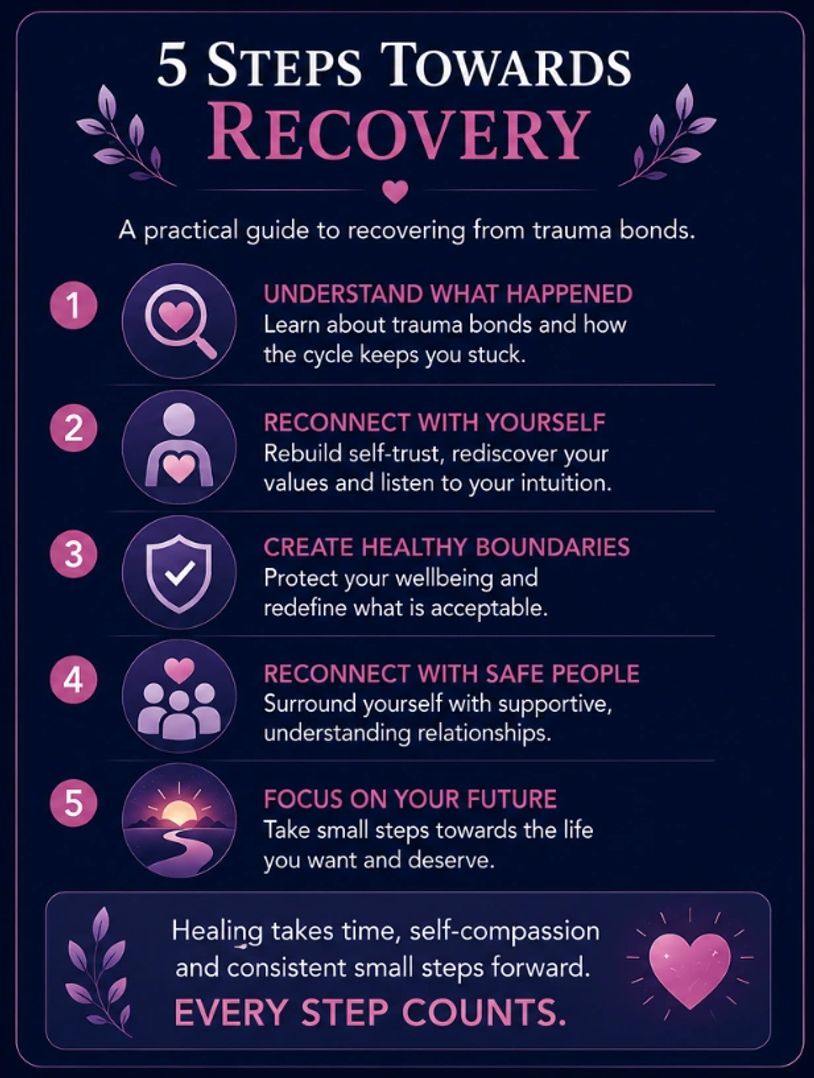
Understanding trauma bonds is an important first step, but recovery often involves much more than information alone.
Many people find that healing comes through a combination of knowledge, self-compassion, supportive relationships and, when needed, professional therapy tailored to their individual experiences.
Therapy can provide a safe and supportive space to explore relationship patterns, understand emotional attachment, rebuild confidence, and strengthen self-trust.
Together we can explore:
Healing is possible.
With understanding, support, and the right tools, many people move from surviving difficult relationships to creating healthier, more fulfilling connections.
Gaslighting
Narcissistic Abuse
Coercive Control
Emotional Dependency
Boundary Setting
Personal Growth & Healing