Signed in as:
filler@godaddy.com

Growing up isn't always easy. Whether your child is struggling with anxiety or confidence, your teenager feels overwhelmed by school or friendships, or you're a young adult navigating life's next steps, therapy offers a safe, supportive space to understand what's happening and move forward with confidence.

Children, teenagers and young adults experience different emotional, social and developmental challenges. What helps a seven-year-old build confidence may be very different from what supports a teenager preparing for exams or a young adult navigating university, work and relationships.
At Moore2therapy, therapy is always adapted to the individual, recognising their age, personality, strengths, life experiences and any neurodivergent needs.
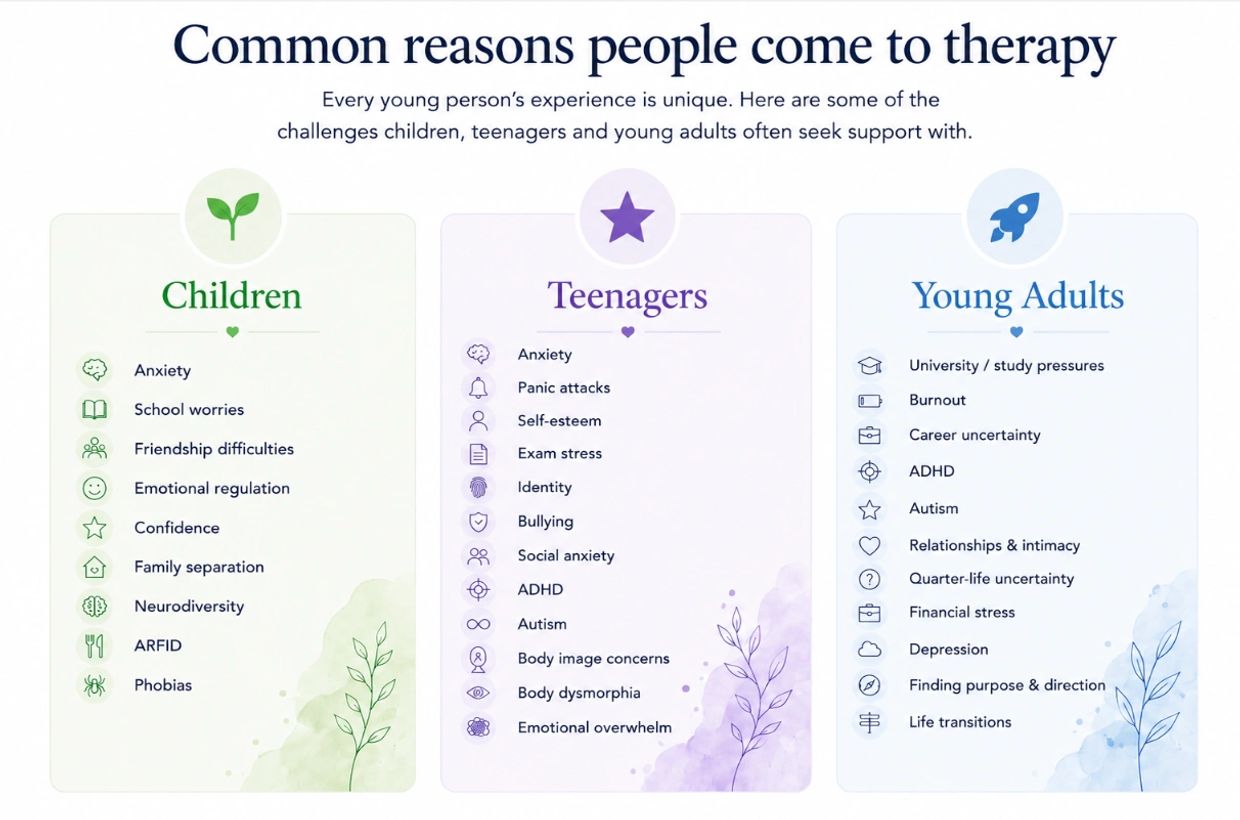
Every young person has their own story.
Some are struggling with anxiety or friendships, others are navigating school, university, relationships or major life transitions. Whatever brings you or your child to therapy, support is always tailored to the individual, recognising their unique experiences, strengths and goals.

Every child, teenager and young adult is unique.
There isn't a one-size-fits-all approach to therapy. Some young people need support to understand and manage their emotions, while others benefit from developing confidence, improving relationships or learning practical strategies to cope with life's challenges.
At Moore2therapy, therapy is always tailored to the individual. Sessions are adapted to each person's age, personality, strengths, life experiences and any neurodivergent needs. Whether someone is experiencing anxiety, low self-esteem, school pressures, friendship difficulties or major life transitions, therapy provides a safe, supportive space to explore what's happening without judgement.
Using an integrative approach, I draw upon a range of evidence-based therapies, including psychotherapy, clinical hypnotherapy, CBT, Solution Focused Therapy, NLP, Positive Psychology, EMDR and Emotional Freedom Techniques (EFT). This allows therapy to be flexible, practical and focused on the individual rather than expecting them to fit one particular model.
The goal isn't simply to reduce symptoms. It's to help young people better understand themselves, build emotional resilience, strengthen confidence and develop the skills they need to navigate life with greater independence and wellbeing.Children, teenagers and young adults experience different emotional, social and developmental challenges. What works for a seven-year-old isn't the same as what supports a sixteen-year-old or a young adult beginning university or their first job.
At Moore2therapy, therapy is always adapted to the individual, recognising their age, personality, strengths, life experiences and any neurodivergent needs.

Parents and carers play an important role in supporting a young person's progress between therapy sessions. While you don't need to have all the answers, the way you respond can make a significant difference to how safe, understood and confident your child feels.
Small, consistent actions at home often have the greatest impact. Listening without judgement, remaining calm during difficult moments and encouraging small steps forward can help reinforce the progress being made in therapy. Change rarely happens overnight, but with patience, encouragement and understanding, confidence and resilience can grow over time.
Therapy works best as a partnership. By working together, we can create a supportive environment where your child feels accepted, understood and empowered to develop the skills they need to navigate life's challenges.
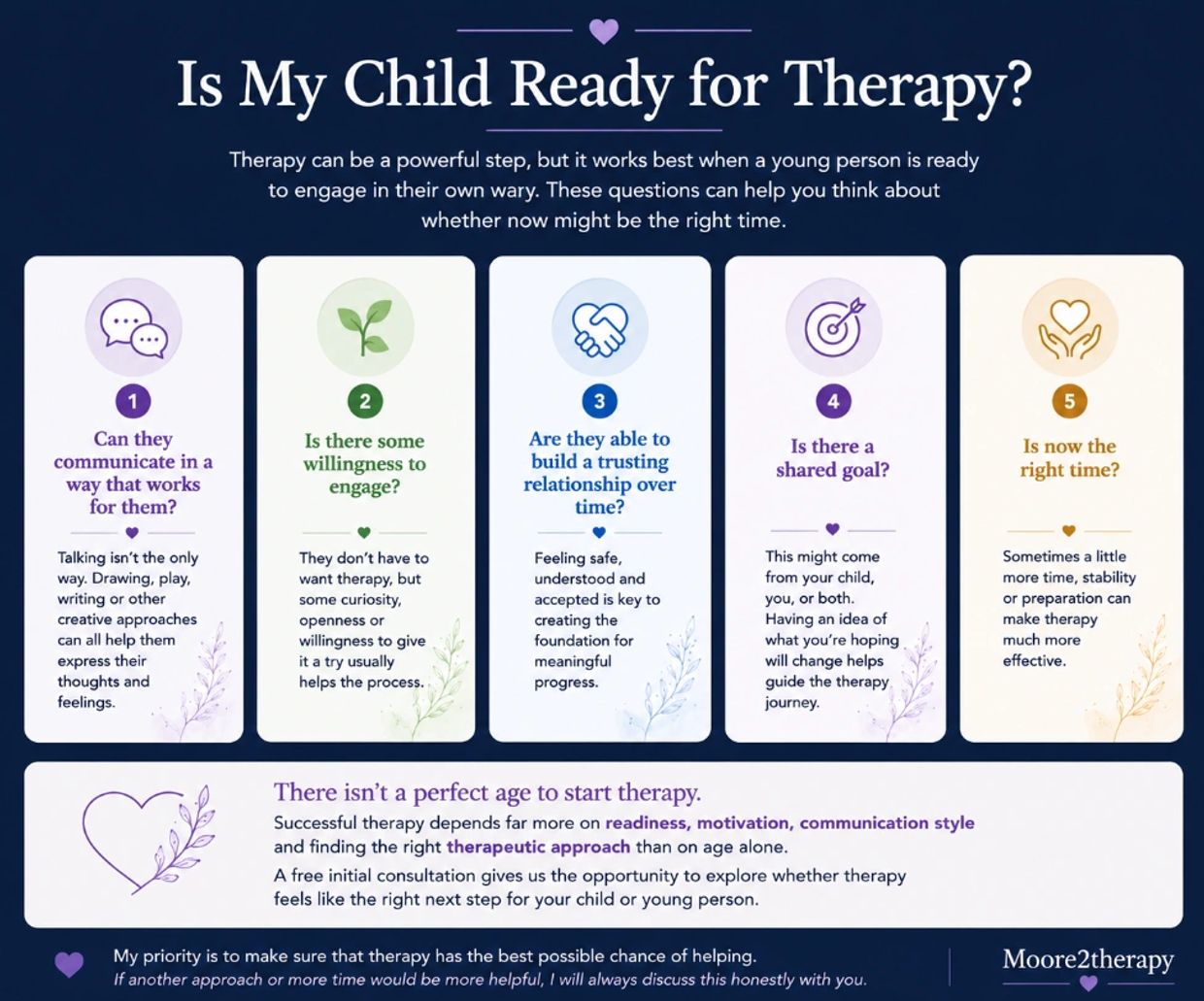
Every child develops at their own pace, and there isn't a perfect age to begin therapy. What matters most is finding the right time, the right approach and a therapist who feels like the right fit. These five questions are designed to help you think about whether now might be the right time to seek support.
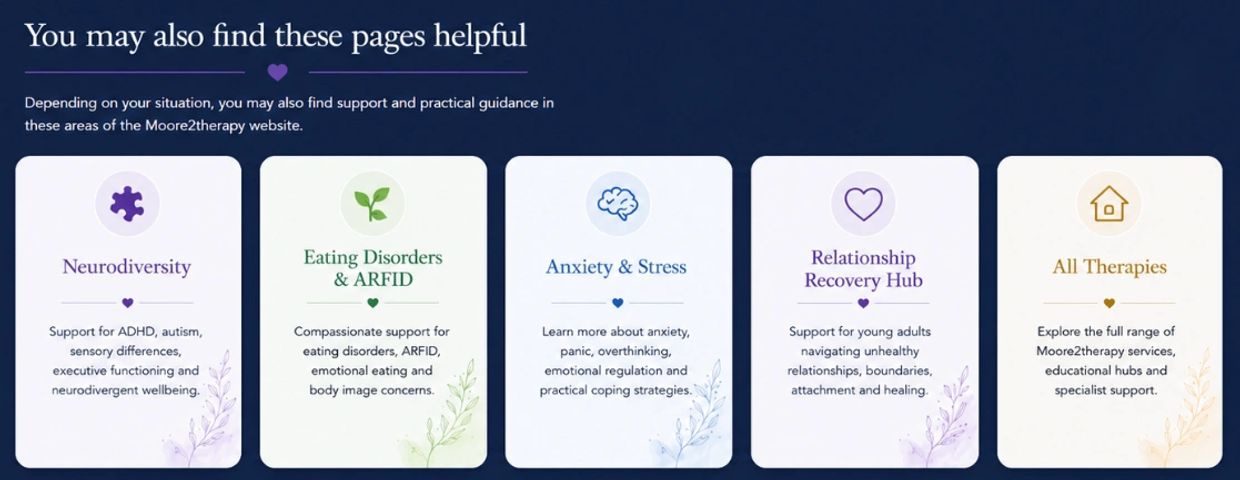
As you continue exploring the Moore2therapy website, you may also find these resources helpful. Many young people experience overlapping challenges, so it's common for anxiety, neurodiversity, confidence, eating difficulties and relationships to be connected.
You can continue exploring any of the related pages below to find information and support that's most relevant to you or your family.
Neurodiversity • Eating Disorders & ARFID • Anxiety & Stress • Relationship Recovery Hub • Individual Therapy • All Therapies