Signed in as:
filler@godaddy.com

This hub supporting Autistic, ADHD and neurodivergent individuals, couples, young people, families and professionals through therapy, education and resources
Understanding neurodiversity is about more than recognising a diagnosis. It's about understanding how people experience the world.
This hub brings together neurodiversity-affirming therapy, practical advocacy tools, downloadable resources and evidence-informed articles to support autistic, ADHD and neurodivergent children, young people, adults, couples, families, schools and professionals.
Whether you're looking for support, understanding or practical guidance, you'll find resources designed to help people feel understood, communicate their needs and thrive in everyday life.
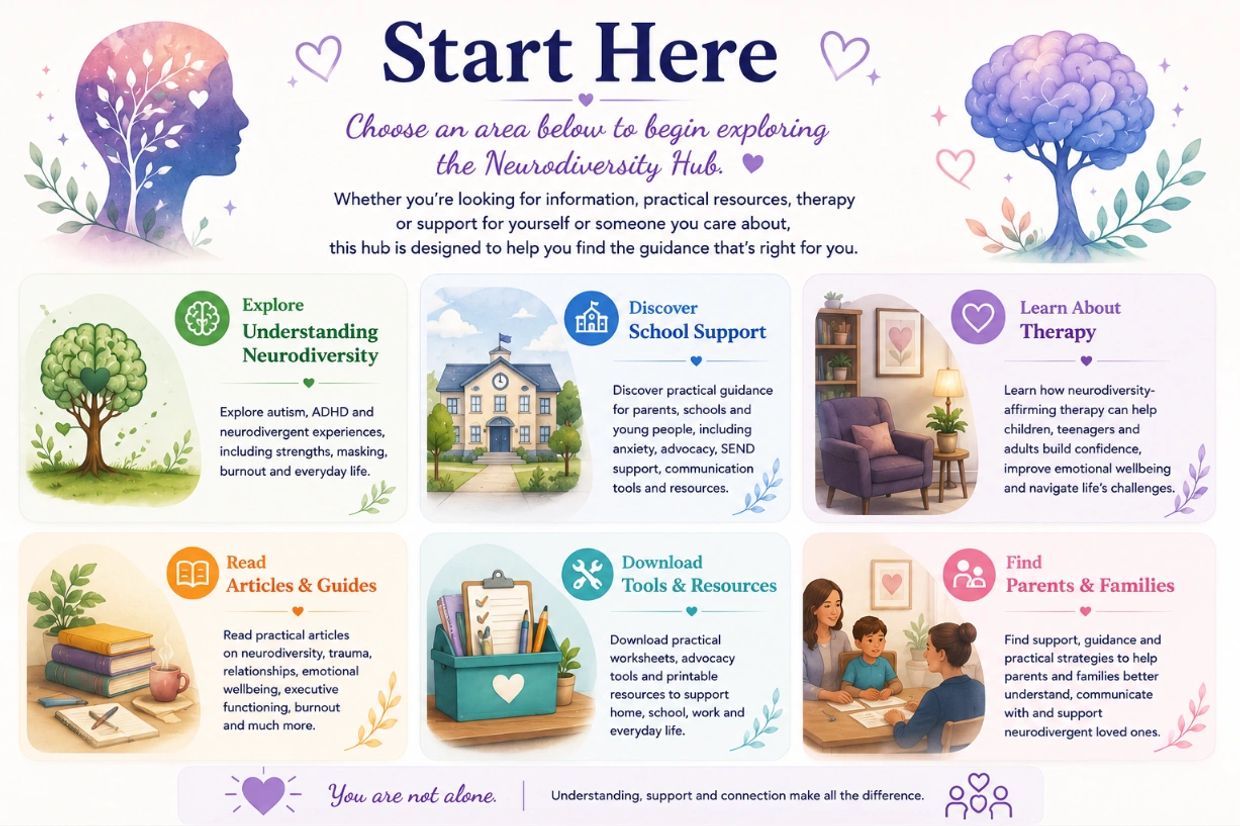
Everyone's experience of neurodiversity is unique.
Whether you're autistic, have ADHD, identify as neurodivergent, are exploring a possible diagnosis, or support someone who is, finding trustworthy information can sometimes feel overwhelming.
The Moore2therapy Neurodiversity Hub has been created to bring together evidence-informed articles, practical resources, therapeutic guidance and advocacy tools in one welcoming place.
Rather than searching dozens of websites, you can explore topics designed to help you better understand yourself or the people you care about.
Choose the area that feels most relevant to you and begin exploring.
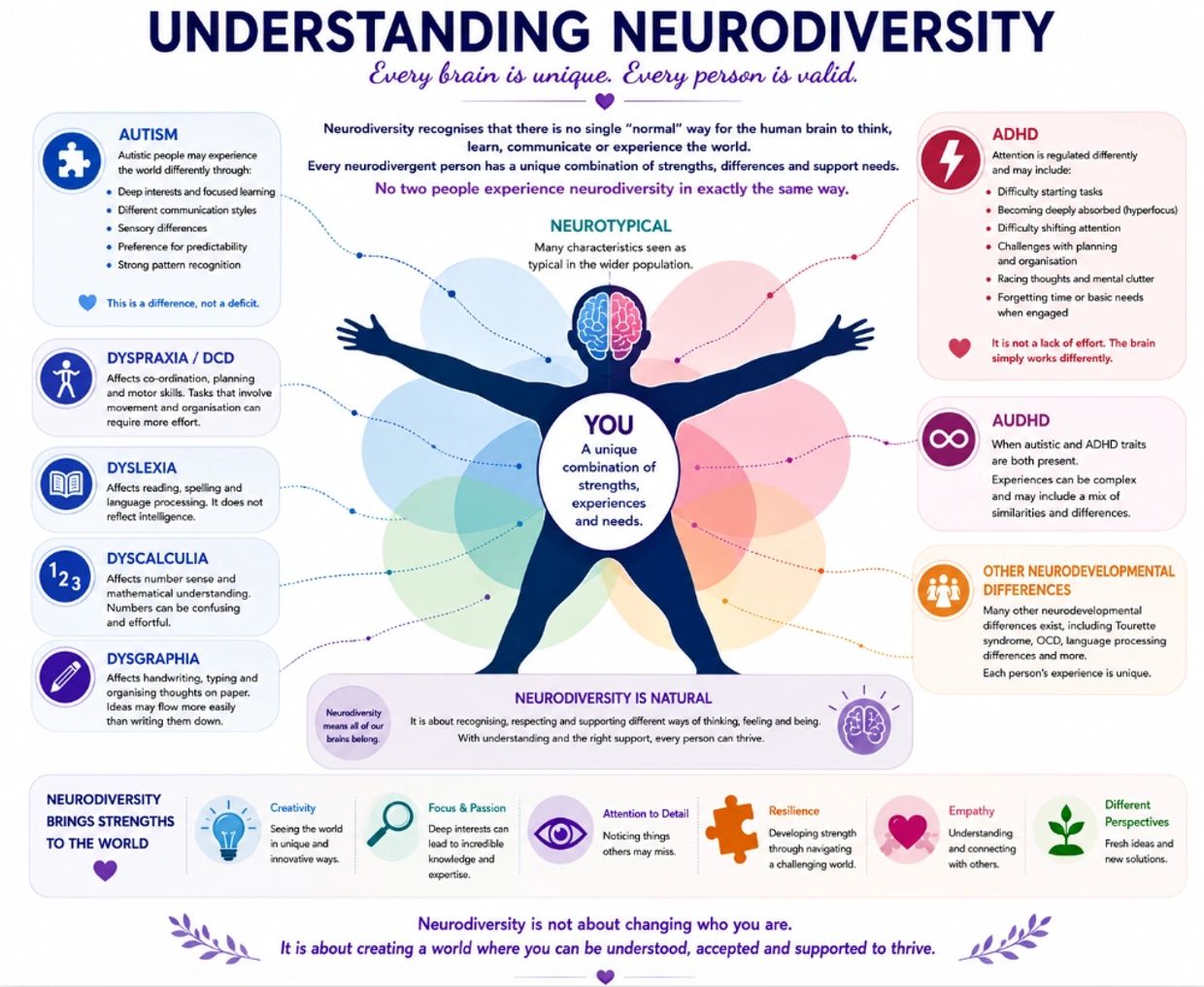
Neurodiversity recognises that there is no single "normal" way for the human brain to think, learn, communicate or experience the world. Every brain is unique, and people naturally process information, emotions and sensory experiences in different ways.
Some people are neurotypical, meaning their brain develops and processes information in ways that are typical for most of the population. Others are neurodivergent, meaning their brain works differently because of one or more neurodevelopmental differences such as Autism, ADHD, Dyslexia, Dyspraxia (DCD), Dyscalculia or Dysgraphia.
Being neurodivergent is not an illness or a character flaw. It represents a different way of experiencing the world. Alongside challenges, many neurodivergent people also possess valuable strengths, including creativity, deep focus, pattern recognition, innovative thinking, empathy and unique perspectives.
Every person's experience is different. Two people with the same diagnosis may have very different strengths, challenges and support needs. Many people also have more than one neurodevelopmental difference, such as AuDHD, where both autistic and ADHD traits are present.
Understanding neurodiversity is not about placing people into boxes. It is about recognising that different brains have different needs. When those needs are understood and supported, people are more likely to thrive at home, in education, at work and in relationships.
At Moore2therapy, I believe that understanding comes before change. Rather than focusing only on labels or difficulties, therapy begins by understanding how your individual brain experiences the world, building on your strengths while helping you develop practical strategies for the challenges you face.
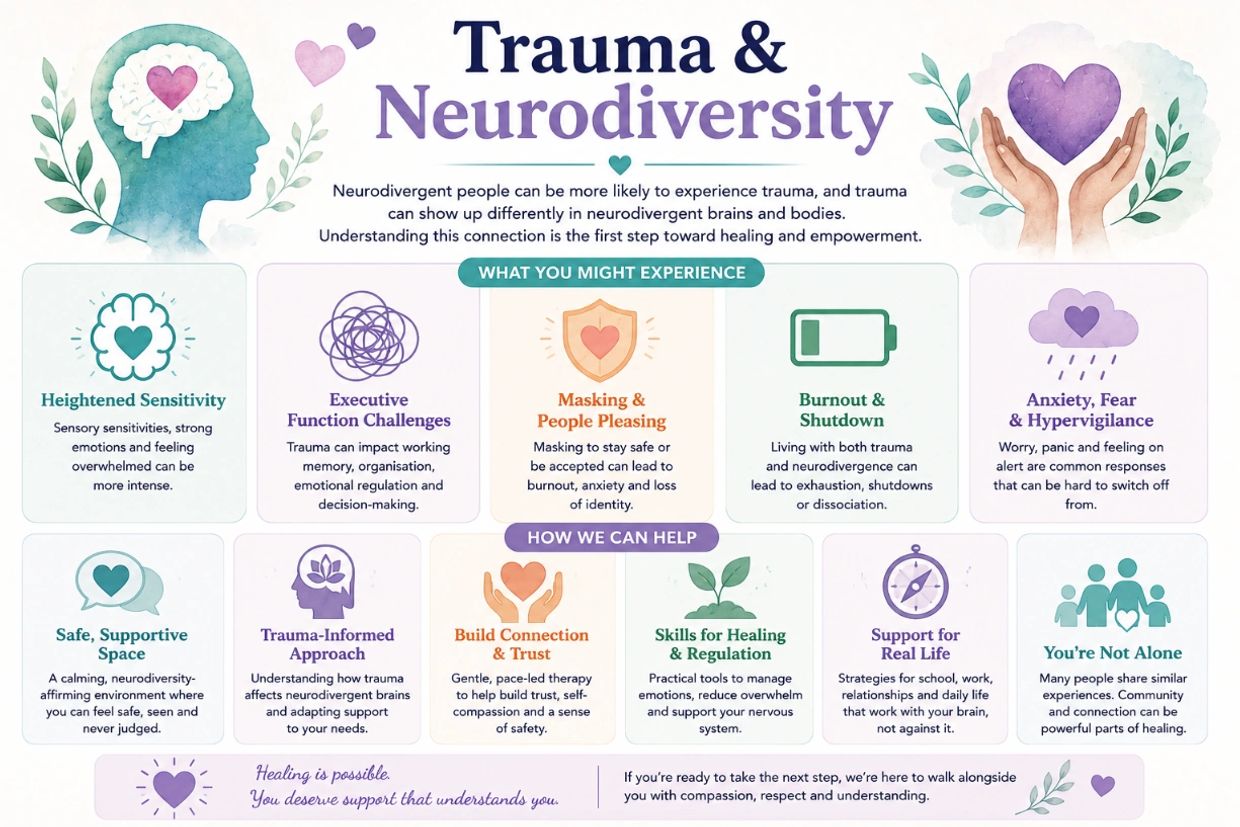
Trauma and neurodiversity are not the same—but they can overlap in ways that make understanding ourselves more complicated.
Many neurodivergent people experience environments that feel overwhelming, unpredictable or invalidating. Repeated experiences of being misunderstood, criticised, excluded or expected to hide parts of themselves can have a lasting impact on emotional wellbeing.
At the same time, trauma itself can affect how we think, feel, communicate and regulate our emotions. Because of this, some trauma responses may look similar to neurodivergent traits, while genuine neurodivergent differences may sometimes be mistaken for the effects of trauma.
Understanding the difference isn't about placing labels on people. It's about recognising the whole person and appreciating that everyone's experiences are unique.Everyone's experience of neurodiversity is unique.
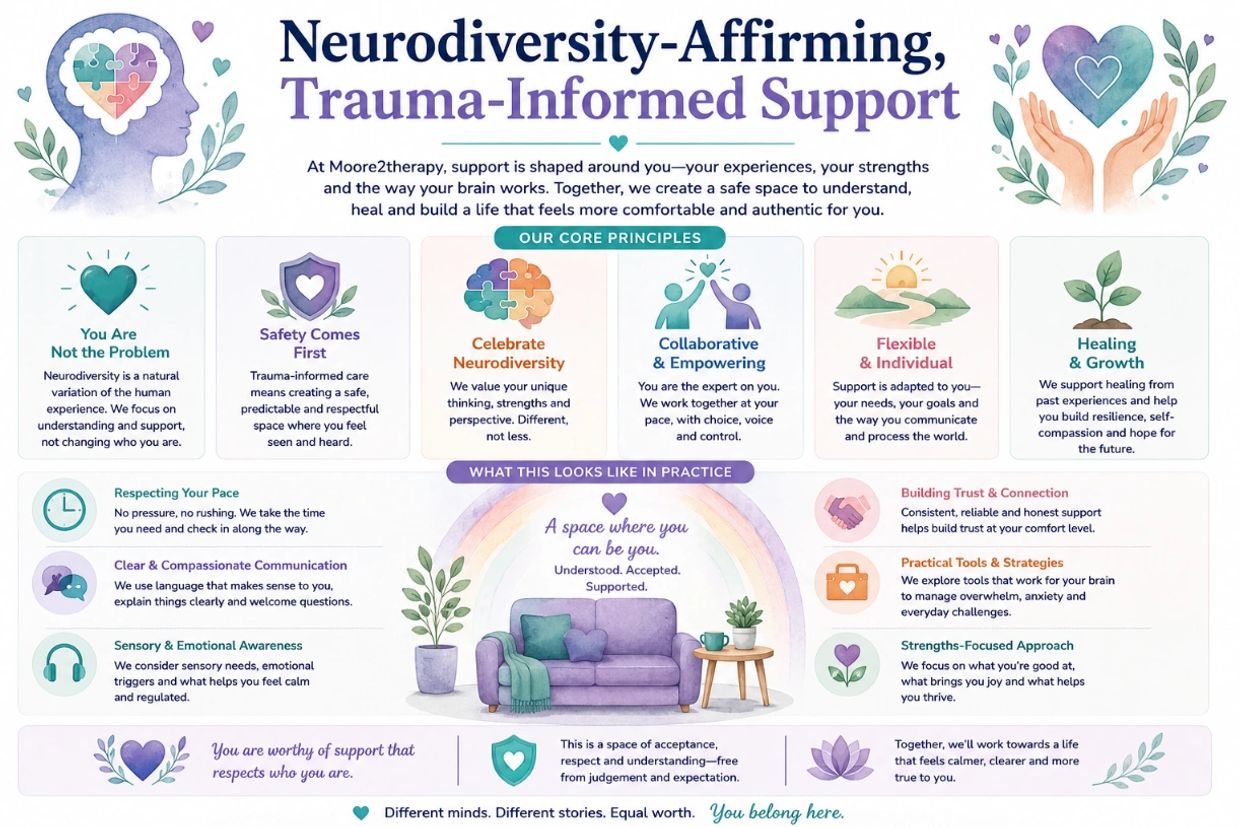
At Moore2therapy, I recognise that no two people experience neurodiversity or trauma in exactly the same way.
Therapy is adapted to the individual, taking into account personal strengths, life experiences, relationships, sensory needs and emotional wellbeing.
The aim isn't to change who you are.
It's to help you better understand yourself, develop practical strategies, strengthen emotional resilience and build a life that works with your brain—not against it.
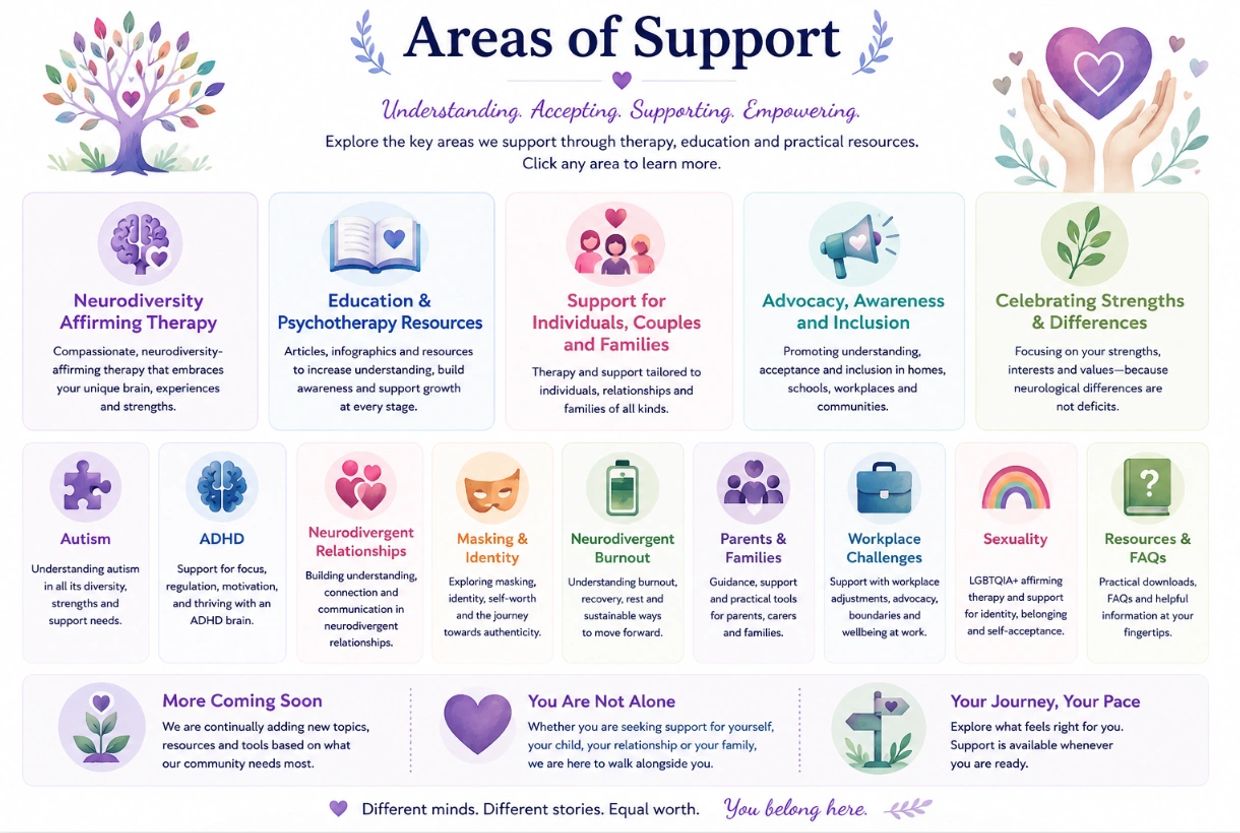
Neurodiversity influences many aspects of life, from education and relationships to emotional wellbeing, work and everyday communication. Because everyone's experiences are different, there is no single path through the Moore2therapy Neurodiversity Hub.
The areas above have been designed to help you explore the topics that matter most to you. Whether you're looking for a better understanding of autism or ADHD, practical guidance for school or work, support for relationships, or downloadable tools and educational resources, you'll find evidence-informed information created to support neurodivergent individuals, families, schools and professionals.
As the hub continues to grow, new articles, practical resources and communication tools will be added to expand the support available and help more people feel understood, empowered and connected.
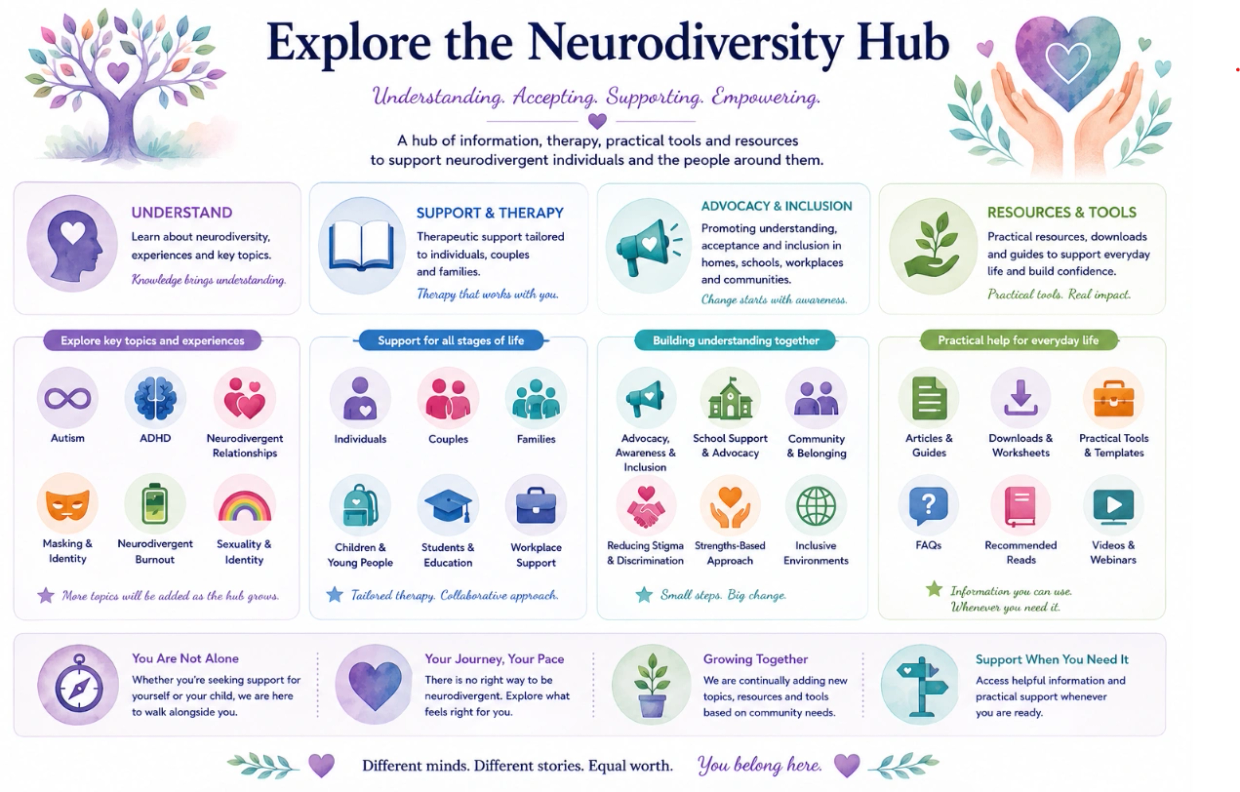
The Moore2therapy Neurodiversity Hub brings together therapy, education, advocacy and practical resources to support neurodivergent individuals, parents, families, schools and professionals.
Rather than searching across multiple websites, you can explore a growing collection of evidence-informed articles, practical tools and downloadable resources designed to help you better understand neurodiversity and navigate everyday challenges with greater confidence.
Whether you're beginning your own journey, supporting someone you care about or looking for professional guidance, the hub has been created to provide trusted information, practical strategies and compassionate support.
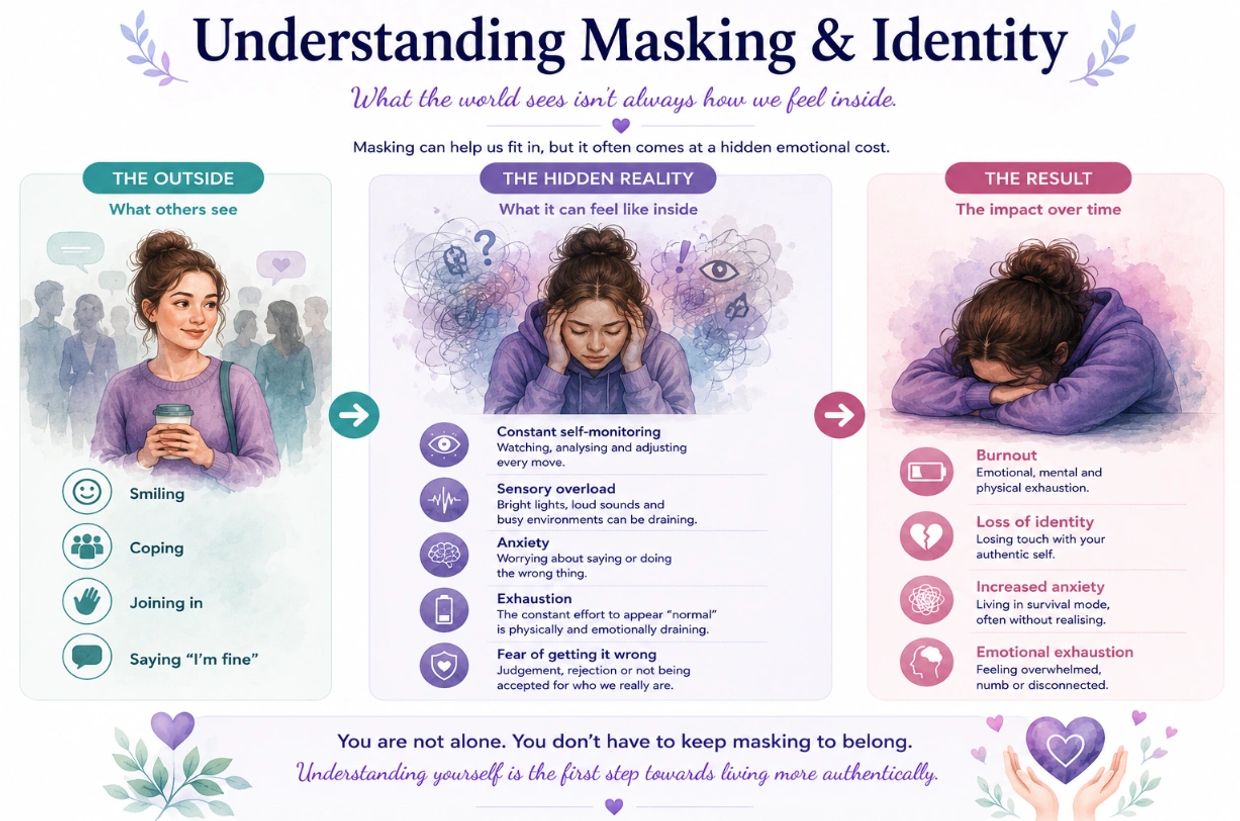
Many neurodivergent people spend years adapting their behaviour to fit into a world that isn't always designed with their needs in mind. This is often known as masking. It may involve hiding natural behaviours, copying social cues, forcing eye contact, carefully rehearsing conversations or suppressing sensory needs in order to avoid standing out.
For some people, masking develops gradually from childhood as a way of feeling safer, avoiding criticism or trying to meet other people's expectations. While these strategies can help someone navigate social situations, they often require significant emotional and mental effort.
Over time, constantly monitoring how you speak, behave or respond can become exhausting. Many people describe feeling drained after social interactions, questioning who they really are, or experiencing anxiety and burnout without fully understanding why. Some only recognise the extent of their masking after receiving an autism or ADHD diagnosis, while others begin to notice it through therapy and self-reflection.
Understanding masking is not about encouraging people to stop masking overnight. Instead, it is about recognising the effort involved, understanding its impact on wellbeing and gradually creating environments where it feels safer to be yourself. As self-understanding grows, many people find they can make choices that better reflect their own needs, strengths and identity rather than simply meeting the expectations of others.
At Moore2therapy, therapy is never about changing who you are. It is about helping you understand yourself with greater compassion, reduce the pressure of constant self-monitoring and build a life that works with your unique way of experiencing the world.
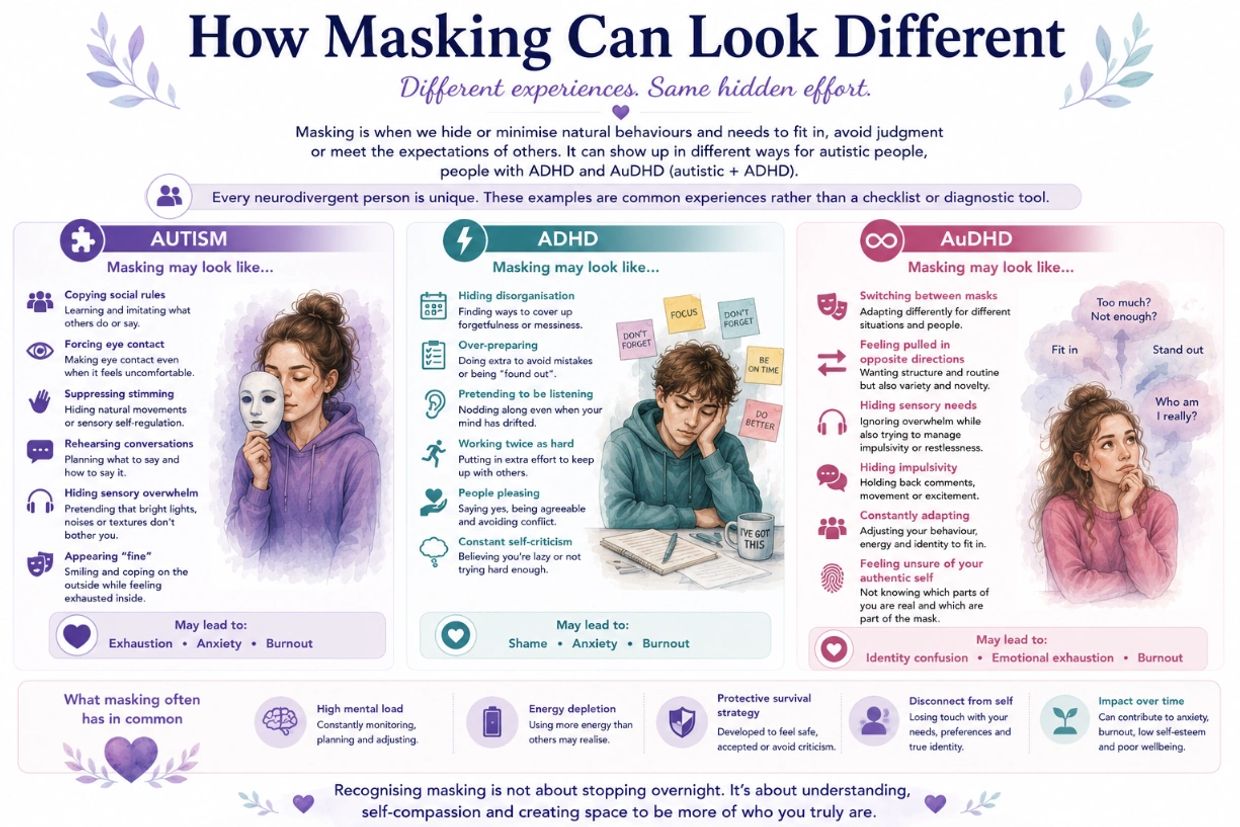
Masking does not look the same for everyone. While it is commonly discussed in relation to autism, it is also experienced by many people with ADHD and AuDHD. The infographic below highlights some of the different ways masking can present and the shared emotional impact it can have.
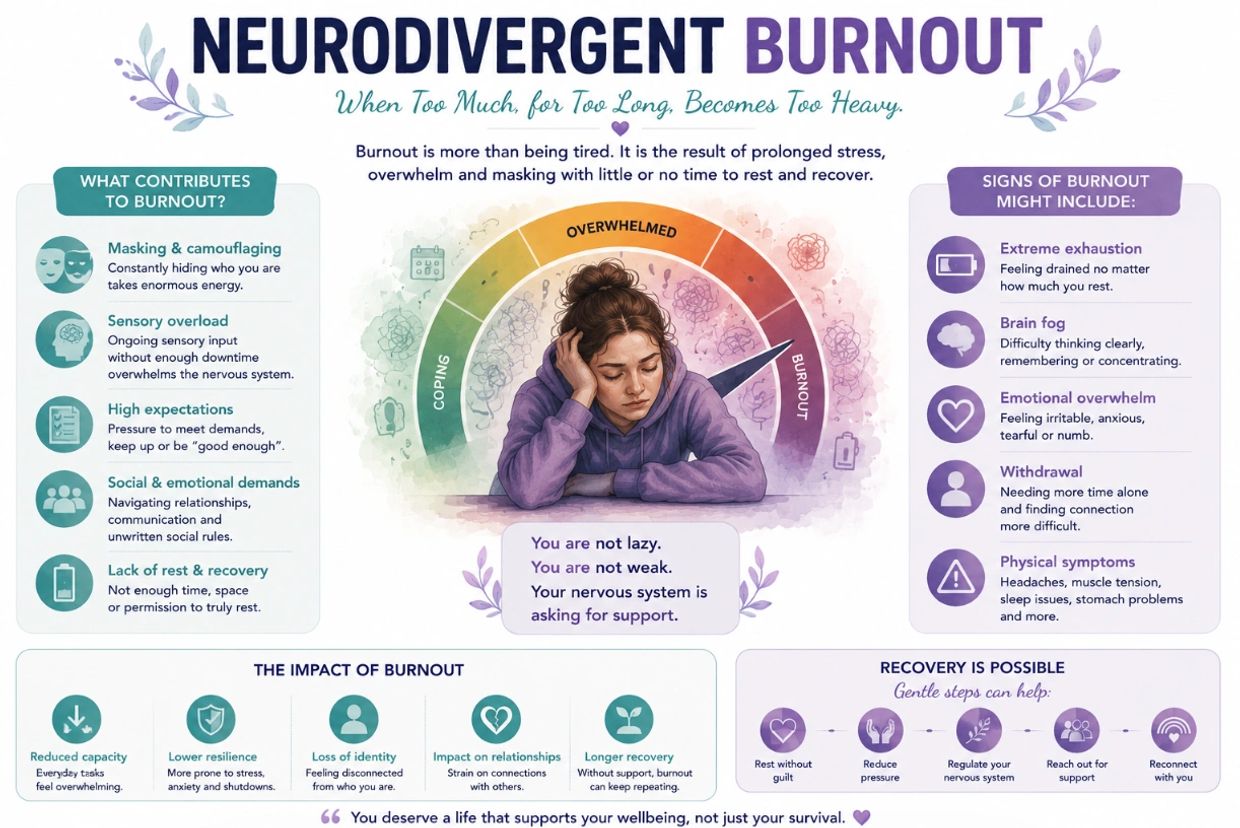
Neurodivergent burnout is more than simply feeling tired after a busy week. It is a state of physical, emotional and mental exhaustion that can develop when the demands of everyday life consistently exceed a person's capacity to cope.
For many autistic and ADHD individuals, burnout may result from prolonged masking, sensory overload, navigating environments that do not meet their needs, or constantly trying to keep up with expectations that require significantly more effort than others may realise. Over time, this ongoing pressure can leave the nervous system feeling overwhelmed, making even routine tasks feel difficult.
Neurodivergent burnout may affect every aspect of daily life. People often describe struggling with concentration, feeling emotionally overwhelmed, withdrawing from social situations, experiencing increased sensory sensitivity or losing confidence in their ability to manage everyday responsibilities. Some people also notice that they have less energy for activities they once enjoyed or find it much harder to recover after periods of stress.
Unlike ordinary tiredness, burnout cannot usually be resolved by simply taking a good night's sleep or a short break. Recovery often requires understanding the underlying causes, reducing unnecessary demands where possible and creating space for genuine rest, self-compassion and nervous system regulation.
At Moore2therapy, therapy begins by recognising that burnout is not a personal failure. It is often a sign that your nervous system has been working incredibly hard for a long time. Together, we can explore the factors contributing to burnout, identify practical strategies to reduce overwhelm and help you build a life that supports your wellbeing rather than continually draining it.
Many neurodivergent people first experience burnout during childhood or adolescence, particularly in school environments where they feel misunderstood or under constant pressure. The next section explores how understanding and advocacy can make a significant difference for children, young people and their families.
School can be a positive and rewarding experience when a child's needs are understood and supported. However, for many neurodivergent children, everyday aspects of school—including sensory environments, social expectations, changes in routine and communication differences—can become overwhelming and exhausting.
When a child is struggling, it is easy to focus on behaviour rather than understanding what the behaviour is communicating. Anxiety, avoidance, emotional outbursts or withdrawal are often signs that a child feels overwhelmed, misunderstood or unable to cope, rather than being deliberately difficult.
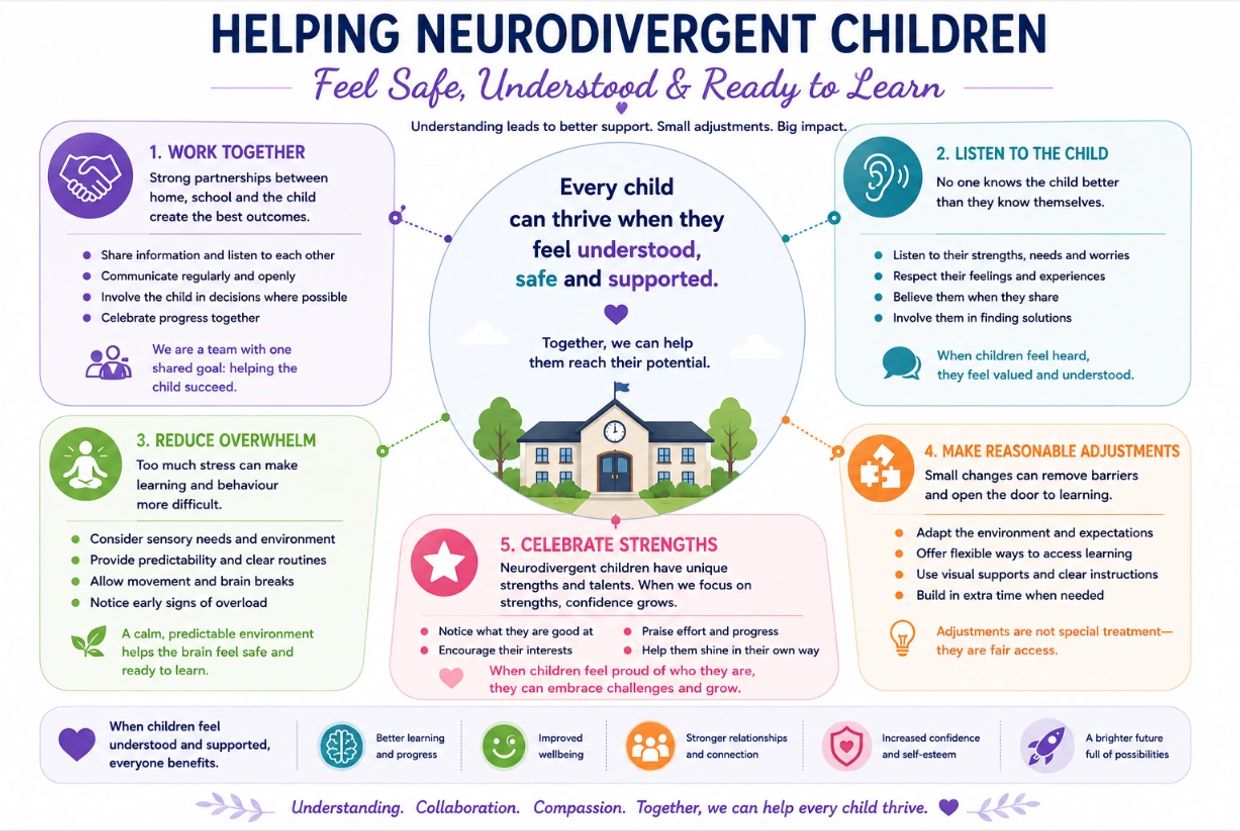
The most effective support comes when parents, schools and professionals work together to understand the child as an individual. Small, thoughtful adjustments can reduce stress, build confidence and help children feel safe, understood and ready to learn.
The infographic above highlights five key principles that can help create a more supportive and inclusive school experience for neurodivergent children.
One practical way to achieve this is through a personalised School Support Profile, helping teachers and support staff understand a child's strengths, needs and the strategies that enable them to thrive.
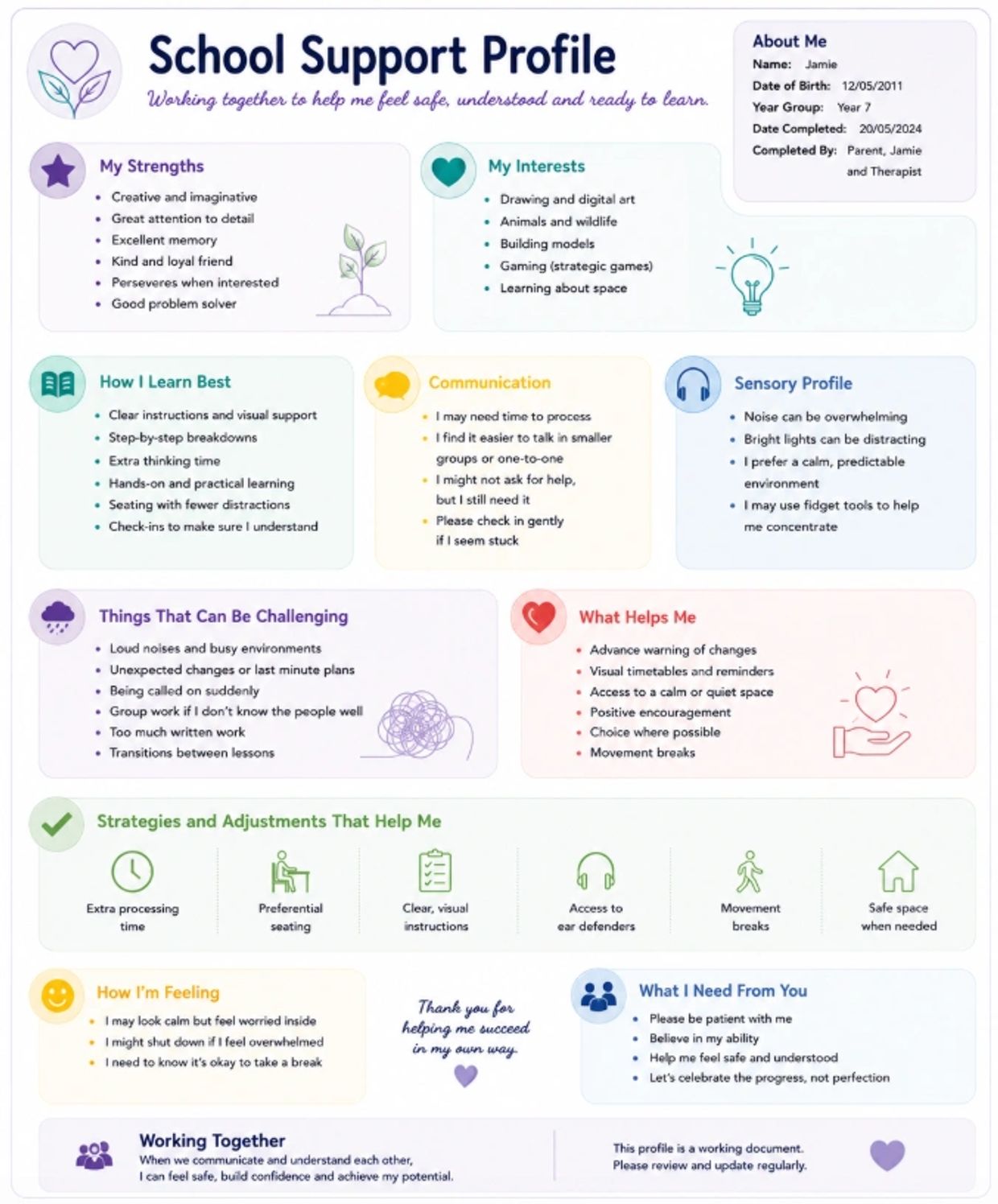
Every neurodivergent child is unique. While a diagnosis can provide valuable information, it does not explain how that individual child learns best, what situations they may find challenging, or the strategies that help them feel safe, confident and able to thrive.
A School Support Profile is a practical, personalised document designed to bridge that gap. It provides teachers, SENCOs and support staff with a clear, easy-to-read overview of a child's strengths, support needs and the reasonable adjustments that can make everyday school life more successful.
Rather than focusing on difficulties alone, the profile encourages a strengths-based approach that helps schools understand the child as an individual. By sharing the right information with the right people, everyone can work together with a shared understanding and consistent support.